Smash Repairs & Panel Beating
Smash Repairs and Panel Beating Dandenong
Insurance and private collision repair: strip-down first, chassis measurement before and after, panel and paint, with both sets of readings handed to you.
Chassis measured before and after every structural repair, on paper.
The short version
What a straight car actually means
A modern body is designed to deform once. Crush zones fold at engineered points to keep the cabin intact, and the steel wrapped around that cabin is not the same steel as the bumper reinforcement. That is why a repair can look right and still be wrong: the gaps line up, the paint matches, and the front rail sits a few millimetres from where the factory put it.
We measure before work starts and again before you collect, off the same reference points, and give you both sets of figures. If a car cannot be brought back inside tolerance, you will hear it from us rather than from the next workshop that puts it on a hoist.
What makes ours different
Chassis measured before and after every structural repair, with the readings handed to you on paper.
2
Chassis measurements per structural job
4
Photos needed for an assessment
1
Site for panel, paint and mechanical
What you get
Included with your smash repairs
Strip-down before the repair is set
Covers and liners come off so damage behind the bumper or inside a rail is found before the plan is fixed, not halfway through the job.
Chassis measured twice
Reference points recorded before work starts and again before collection, with both sets of readings printed and handed over.
Colour matched from a spray-out
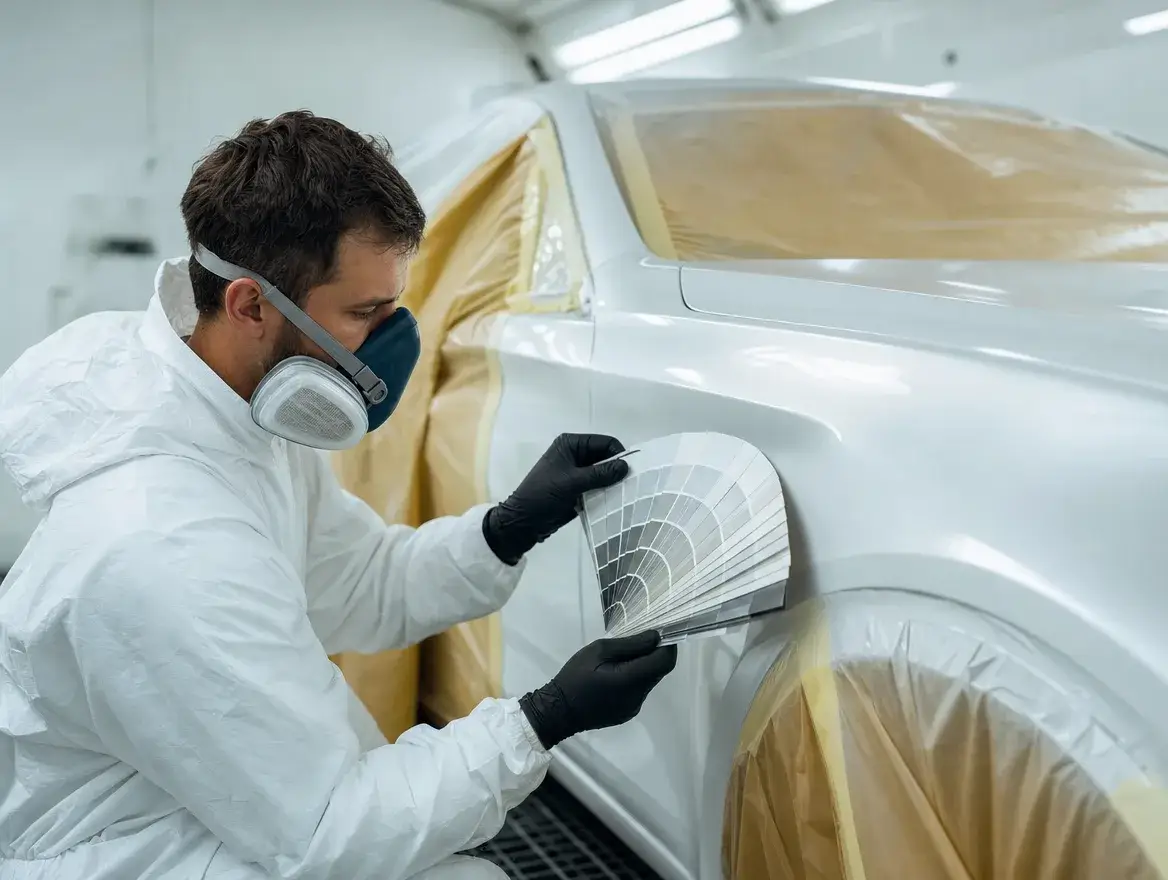
A test card is sprayed and checked against your panel under daylight-balanced light, then blended into the adjoining panel where needed.
Corrosion protection restored
Any cavity we open is re-waxed and bare metal sealed, because a repaired seam that was never re-protected rusts from the inside out.
Sensor calibration accounted for
Radar, camera and blind-spot hardware is identified before quoting, so anything needing re-aiming after panel work is planned in rather than discovered.
What the repair includes
Every job begins with a strip-down, because the visible damage is the smaller half. Bumper covers, liners and lamps come off so we can see the reinforcement bar, the crush cans, the radiator support and whether a rail has moved. Anything hidden that turns up at this point goes back to you, and to your insurer on a claim, as a documented addition rather than a surprise at the end.
The repair itself covers panel work or replacement at the factory joints, welding and panel bonding where the manufacturer specifies it, plastic bumper welding rather than filler where the plastic can take it, colour-matched refinishing, and cavity wax back inside any section we opened. Restoring corrosion protection inside a repaired panel is the step most often skipped, and it is why a repair can look perfect for four years and then bubble along a seam.
How a collision job runs
Send photographs first: one straight on, two at an angle, one wide shot of the whole car, and a picture of the compliance plate or your rego papers. That is enough for a written initial assessment. If it is an insurance claim you lodge the claim and pass us the claim number; if it is private, we quote and you decide.
Once the parts are in, the car comes in and stays in. Strip, measure, repair, prime, paint, bake, reassemble, then measure again and set the panel gaps. Fresh paint needs cure time before it is cut and polished, so a job that could be bolted together on a Friday is often better collected the following week than pushed out the door soft.
What customers get wrong after a crash
The first is colour. A paint code is a starting point, not an answer: two cars with the same code and different sun exposure are visibly different, metallics shift with viewing angle, and three-stage pearls need the base and pearl layers built in the right ratio. We spray a test card, compare it against your panel under daylight-balanced light, then blend into the adjacent panel where the body shape gives us nowhere to hide an edge.
The second is electronics. If your car has radar behind the grille, a camera behind the windscreen or blind-spot sensors in the rear bumper, removing and refitting those panels can put the sensors outside their calibrated aim. Lane keeping and autonomous braking then read the road from the wrong angle, which is worse than having no system at all. We identify that hardware before quoting so recalibration is in the plan.
Questions we get
Smash Repairs questions, answered
Anything not covered here, ask the assistant in the corner or message (03) 9793 4820 on WhatsApp.
Some Victorian comprehensive policies include a choice-of-repairer provision and some do not, and the answer sits in your policy wording under repairer selection. Read that section or ask your insurer before agreeing to be sent anywhere. If your policy directs the repair elsewhere, we can still assess the damage privately so you know what you are comparing.
It depends on the material and where the damage sits. Steel outer panels with accessible dents and no stretched metal are usually repairable. A crease across a swage line, damage into a structural member, or high-strength steel that cannot be heated without losing its temper gets replaced at the factory joint. Aluminium panels are replaced far more often than steel, because they work-harden and crack rather than stretch.
A single bumper cover with no hidden damage is a few days. A quarter panel with paint blending, or anything structural, runs into a couple of weeks, because parts lead time, cure time between paint stages and the second chassis measurement all sit in the middle. You get a date at strip-down, once we know what is actually broken, rather than at the first phone call.
It is matched to your car as it is now, not to how it left the factory. We spray a test card, compare it to the panel under controlled light, adjust the tint and blend into adjoining panels so there is no hard edge for your eye to catch. On a heavily faded roof or bonnet we will say upfront that a full-panel respray is the only way to get an invisible result.
Often, yes. Shallow dents with the paint unbroken can be pushed out from behind with paintless dent removal, which keeps the original factory finish and is the better outcome whenever it is available. Dents sitting on a swage line, on a double-skinned section with no access behind it, or with cracked paint have to be filled and refinished instead.
While it is here
Combine it with another job
Everything below happens at the same address, so a second job means a second line on the same invoice, not a second trip across town.
Car Service
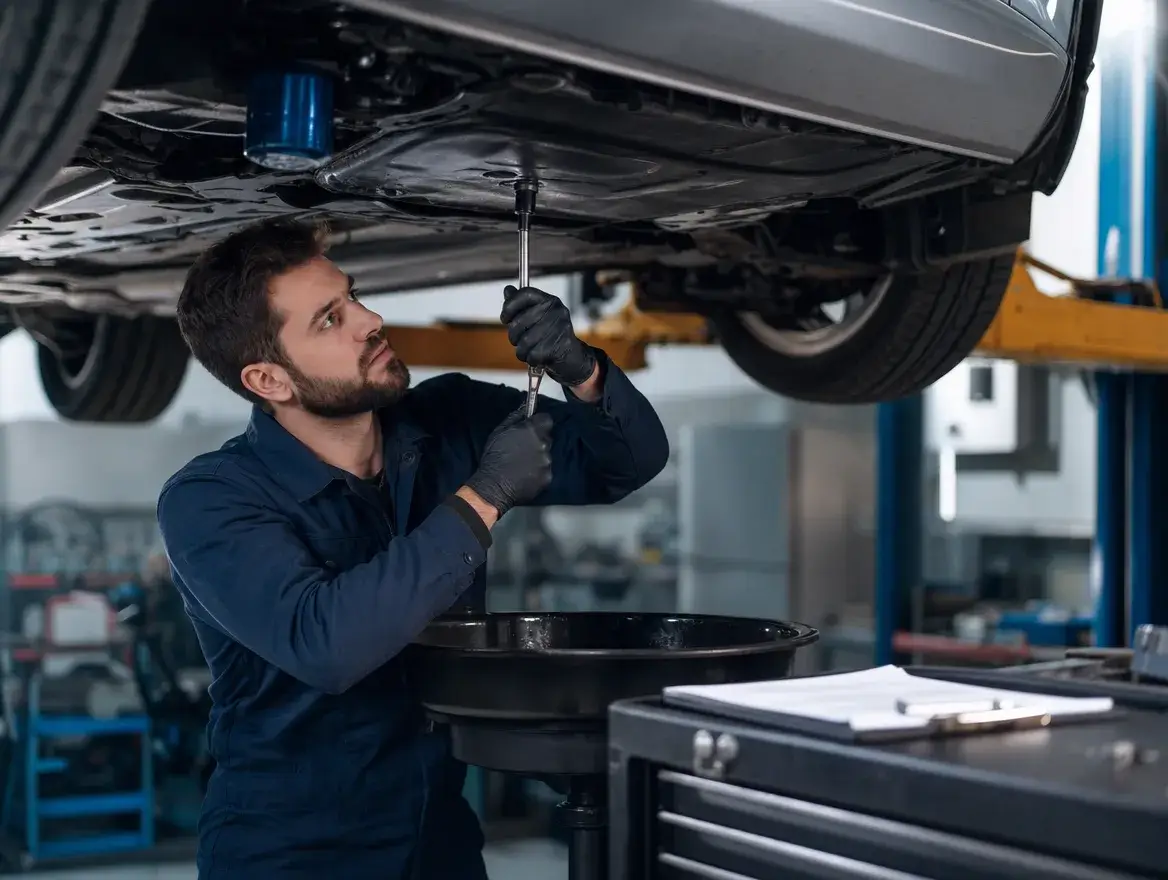
Minor, major and manufacturer log book servicing, done to the schedule that keeps a new-car warranty intact.
Log book stamped to the manufacturer schedule, so the warranty conditions are met without going back to the dealership.
Tyres
New tyres fitted, balanced and aligned in one visit, with the old set disposed of for you.
DetailsCar Detailing
Interior and exterior detailing, machine paint correction and ceramic-grade protection.
DetailsWindow Tinting
Ceramic and carbon window film fitted to the Victorian light-transmission limits, cut to pattern and heat-shrunk to fit.
DetailsMechanical Repairs
Brakes, suspension, clutch, cooling, timing, electrical and diagnostics on petrol, diesel and hybrid.
DetailsSend us photos of the damage
Four photographs and your rego are enough for a written assessment before you drive anywhere.
(03) 9793 4820Mon–Fri 7:30–17:30, Sat 8–14