Tyre Replacement, Balance & Alignment
New Tyres, Balanced and Aligned
Tyre fitting, dynamic balancing and four-wheel laser alignment in one Dandenong visit, with the old set taken away for recycling.
Four-wheel alignment comes with every full set, not as an added line.
The short version
Tyres are the only part touching the road
Everything the rest of the car does arrives at four contact patches about the size of your hand. A tyre that is the wrong load rating, eight summers old, or running on a toe setting a millimetre out will feel fine at 40 km/h and let go in the wet at highway speed. The minimum legal tread in Victoria is 1.5 millimetres across the tread face, and grip in standing water starts falling long before you reach it. That figure is the general road-law minimum rather than legal advice, so we measure yours and tell you where it actually sits.
We fit to the placard in your door jamb: size, load index and speed rating, or a considered alternative once you tell us what you want the car to do. Then we balance, align and torque, because a new set fitted onto a bad alignment gets scrubbed out well before it is worn out.
What makes ours different
Four-wheel laser alignment included with every full set — not sold back to you as an extra.
4
Wheels aligned, not two
1
Visit to fit, balance and align
1.5mm
Minimum legal tread, millimetres
What you get
Included with your tyres
Fitted to your placard rating
Size, load index and speed rating matched to the plate in your door jamb, or a deliberate alternative discussed with you first.
Dynamic balance on both planes
Weights set on the inner and outer planes so the wheel is balanced as an assembly, rather than corrected on one face and left rocking.
Four-wheel laser alignment
Toe, camber, caster where adjustable, and the rear thrust angle, included with a full set instead of written up as an extra.
Pressure sensor kit renewed
Valve seal, nut and core replaced on sensor-equipped wheels, since the perished old rubber is the usual cause of a slow leak after fitting.
Old set taken away
Your used tyres leave with us for recycling, and the wheel nuts go back on with a torque wrench rather than a rattle gun.
What a tyre visit includes
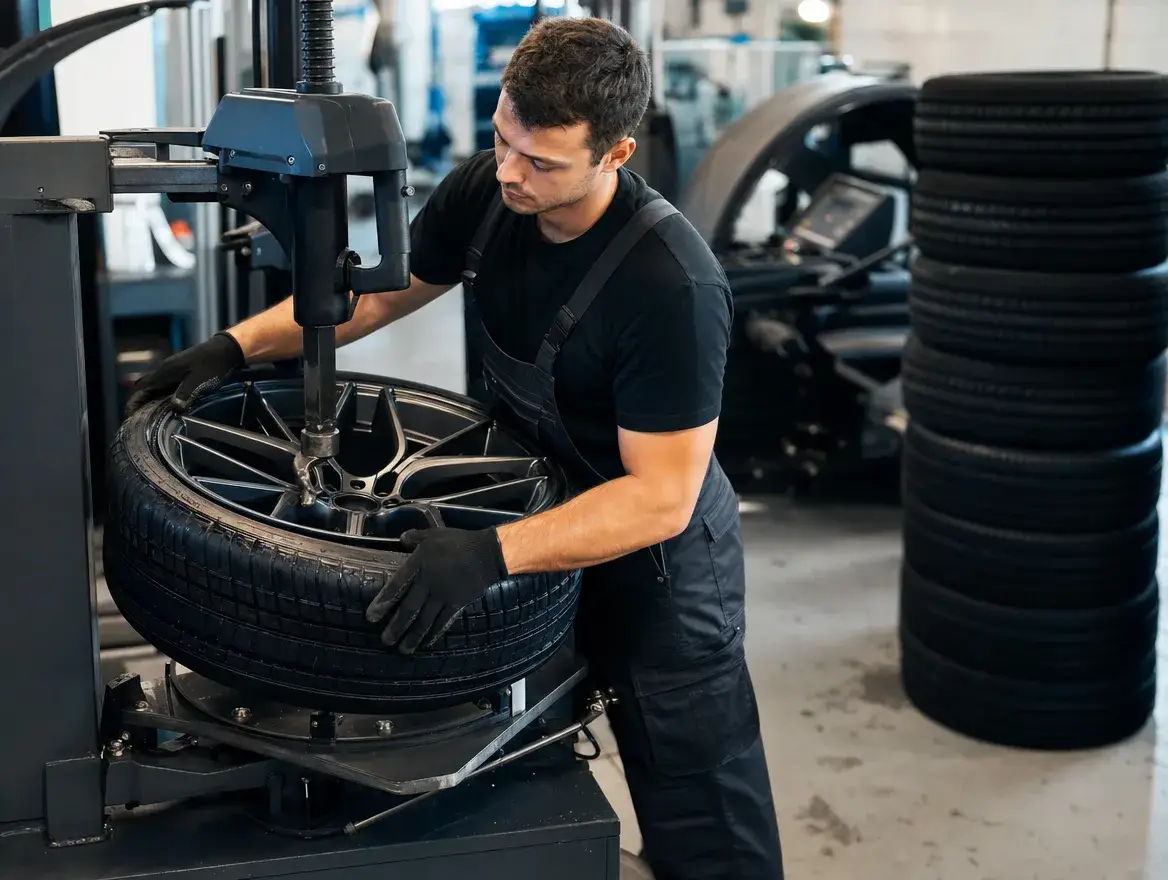
The wheels come off the car, the old tyres are broken down and taken away for recycling, and the rims are inspected on the inside face where kerb damage and corrosion hide. New tyres go on with fresh valve hardware, and on cars with pressure sensors the service kit, meaning the seal, nut and core, is replaced rather than reused. A five-year-old rubber grommet is exactly what leaks a week after a tyre change.
Each wheel is dynamically balanced with weights set on both planes rather than clamped to the outer rim only, and inflated to the placard pressure cold. Then a four-wheel laser alignment: toe, camber and caster where the car allows adjustment, plus the rear thrust angle, so the back axle is pointing where the front wheels think it is.
How we choose and fit a set
Tell us the car, how far you drive and what you actually care about: quiet, wet grip, tread life, or a load rating for towing. Those pull against each other, and the useful conversation is about which two matter most to you. We read your old tyres before recommending anything, because the wear pattern is a diagnosis. Feathered inner edges point at toe, one-sided wear at camber, cupping at tired dampers, centre wear at over-inflation and both shoulders at under-inflation.
Directional tyres go on with the rotation arrow the right way round and asymmetric tyres with the outboard face out, which sounds obvious and is the most common fitting error on a rushed change. Wheel nuts are torqued to your vehicle figure, and we ask you to call back in so they can be re-checked after the first hundred kilometres, once the wheel has fully seated against the hub.
What people get wrong about tyres
Age is the one almost nobody checks. Every tyre carries a four-digit date code on the sidewall giving the week and year it was made, and rubber hardens with time whether the car is driven or parked. A tyre with plenty of tread and eight Dandenong summers behind it has lost wet grip you cannot see, and the spare under the boot floor is usually the oldest tyre on the car.
The second is puncture repair. A nail through the crown of the tread, away from the shoulder, can be properly repaired from the inside with a combined plug and patch once the tyre is off the rim. A sidewall or shoulder injury cannot, because that area flexes on every rotation. An external plug pushed in without demounting the tyre is a get-you-home measure, not a repair, and we will tell you which one you have.
Questions we get
Tyres questions, answered
Anything not covered here, ask the assistant in the corner or message (03) 9793 4820 on WhatsApp.
Not always, but new tyres should go on in pairs across an axle, and the deeper tread belongs on the rear where a sudden loss of grip is hardest to correct. A constant all-wheel-drive car is different again: a mismatch in rolling circumference between axles makes the centre differential or coupling work continuously, so those generally want four. We will tell you which category yours falls into.
Roughly every second service on a car with the same size wheels front and rear, and only in a pattern your tyres allow. Directional tyres move front to back on the same side, asymmetric tyres can cross, and a staggered fitment with wider rear wheels cannot be rotated at all. Rotation evens out wear; it does not fix the alignment fault that caused uneven wear in the first place.
A vibration that appears in a narrow speed band and comes through the steering wheel is usually a front wheel out of balance, a thrown balance weight or a tyre with a separated belt. Felt through the seat instead, it points to a rear wheel. Brake trouble gives you a pulse through the pedal rather than a constant shake, which is how we separate the two before touching anything.
It is needed if the car has been on the road long enough to be out, which is most cars. Kerb strikes, one hard hit in a pothole on an industrial back street and worn suspension bushes all move the settings, and a fresh set of tyres records that error as uneven wear within a few thousand kilometres. That is exactly why alignment is included with a full set here.
Yes. We check the size, load index, speed rating and date code against your placard before they go on, and tell you if any of those are wrong for the car rather than fitting them quietly. Balancing, valve hardware and torque are handled the same either way. Alignment is quoted as its own item when the tyres are not supplied by us.
While it is here
Combine it with another job
Everything below happens at the same address, so a second job means a second line on the same invoice, not a second trip across town.
Car Service
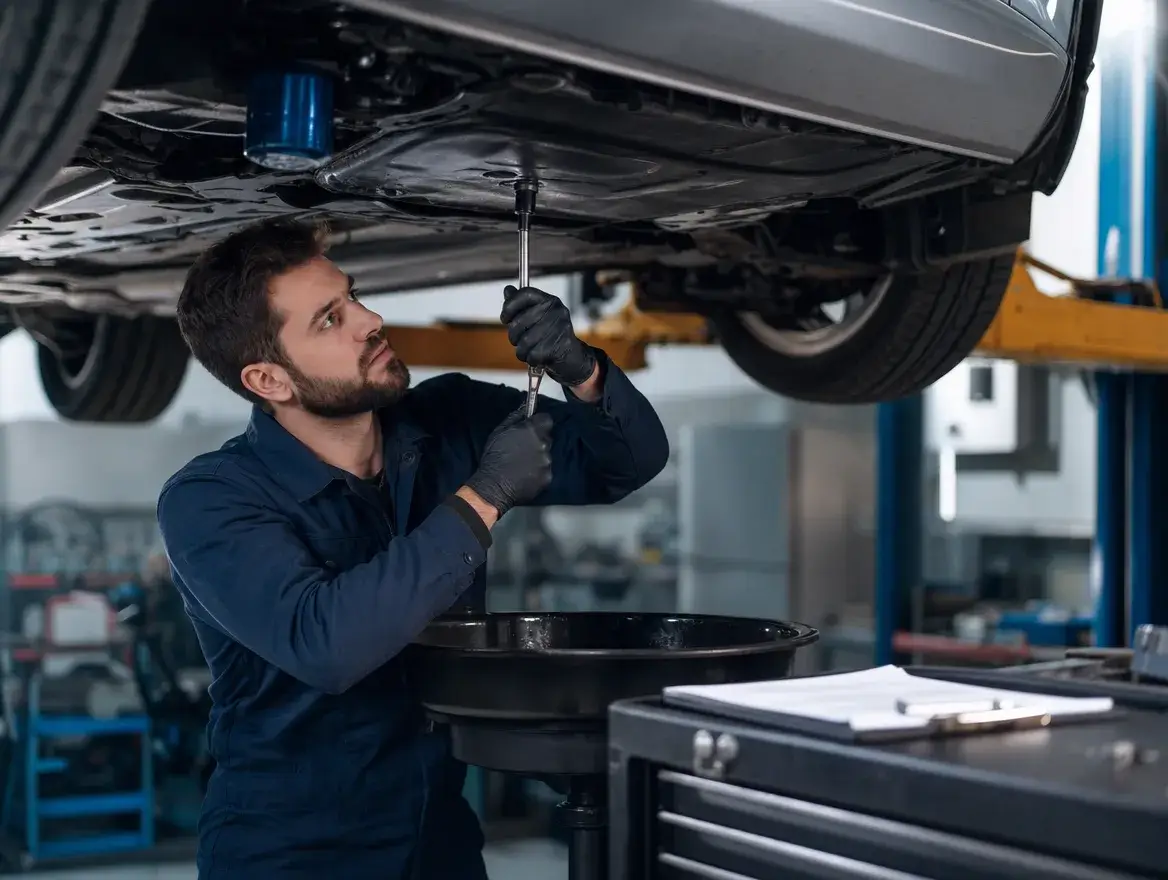
Minor, major and manufacturer log book servicing, done to the schedule that keeps a new-car warranty intact.
Log book stamped to the manufacturer schedule, so the warranty conditions are met without going back to the dealership.
Smash Repairs
Insurance and private collision repair — panel, chassis alignment and colour-matched refinishing.
DetailsCar Detailing
Interior and exterior detailing, machine paint correction and ceramic-grade protection.
DetailsWindow Tinting
Ceramic and carbon window film fitted to the Victorian light-transmission limits, cut to pattern and heat-shrunk to fit.
DetailsMechanical Repairs
Brakes, suspension, clutch, cooling, timing, electrical and diagnostics on petrol, diesel and hybrid.
DetailsGet a tyre and alignment slot
Send a photo of your sidewall and we will have the right set ready when you arrive.
(03) 9793 4820Mon–Fri 7:30–17:30, Sat 8–14